Investing in a hair transplant London is a major step toward reclaiming your self-esteem. You expect a smooth journey from the operating room to a full head of hair. However, the reality of biological healing often feels messy. Many patients in the UK notice that their new hair grows at different speeds. One side might look thicker than the other during the first few months. This unpredictability creates significant anxiety and leads to many sleepless nights. You might wonder if the procedure failed or if you did something wrong. It is important to stay calm and understand how the body repairs itself. Most unpredictable results are actually a normal part of the maturation process. This guide will help you navigate the confusing middle stages of your restoration journey.
Managing Your Initial Expectations
The most common cause of stress is a simple misunderstanding of the timeline. You must remember that hair does not grow back overnight. A hair transplant London requires a full year to reveal the final outcome. Many people start to worry at month three or four. At this stage, the hair is often thin, wispy, and uneven. You might see small patches of growth surrounded by bare skin. This is not a sign of failure but a sign of transition. Your scalp has undergone a significant surgical event. Every follicle responds to the relocation process in its own unique way. Some follicles wake up early while others stay dormant for longer. You must give your scalp the time it needs to find its rhythm.
Why Your Hair Growth Might Look Uneven
Uneven growth is the primary reason patients feel their results are unpredictable. You might see a strong hairline but a very thin crown. Alternatively, the left temple might show more progress than the right temple. This happens because the blood supply varies across different areas of the scalp. The front of the head often has better circulation than the back. Better blood flow usually translates to faster follicle activation. When you choose a hair transplant London, the surgeon places thousands of individual grafts. These grafts do not follow a synchronised schedule. Each one is an independent living unit with its own internal clock. Unevenness in the first six months is nearly universal among surgical patients.
The Reality of the Shedding Phase
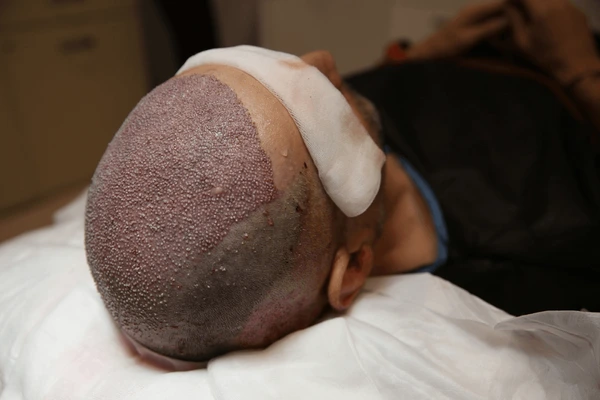
Before new hair can grow, the old hair shafts must fall out. This process is known as shock loss and happens shortly after your hair transplant London. It can be a very frightening experience to see your new hair on your pillow. You might feel like you are losing the very investment you just made. However, this shed is a positive sign that the follicles are entering a new cycle. The root remains healthy and anchored deep within the skin. Once the old shaft drops, the follicle rests before producing a new, stronger hair. This resting period varies from person to person. If your shed was patchy, your initial regrowth will also look patchy.
Differences in Follicle Maturation
Follicles go through various stages of maturation after a hair transplant London. Initial hairs are often very fine and light in colour. They may even look like “peach fuzz” at first. Over time, these hairs thicken and gain their natural pigment. Because this happens at different rates, your hair density will look inconsistent. One area might have matured hairs while another still has fine fuzz. This creates a staggered look that many mistake for a poor result. In reality, the scalp is simply working through the biological phases of hair production. Consistency usually arrives between the eight and ten-month marks.
When to Seek Professional Advice
While patience is vital, you should also know when to take action. If you notice signs of infection or extreme redness, contact your clinic immediately. A reputable hair transplant London centre will provide a dedicated aftercare line. You should reach out if you see zero growth at all by the six-month point. While rare, some underlying health issues can hinder the success of the grafts. It is better to have a professional check your progress than to worry in silence. Most clinics expect patients to have concerns during the recovery period. They are happy to provide reassurance or a physical examination to put your mind at ease.
Contacting Your Hair Transplant London Specialist
Your first point of contact should always be your original surgical team. They know the specifics of your case and the number of grafts they placed. If you feel your hair transplant London results are truly stalling, request a follow-up appointment. A specialist can use high-powered magnification to look at the skin surface. They can often see tiny new hairs that are not yet visible to the naked eye. This visual proof provides immense relief to worried patients. A good clinic will support you through the entire twelve-month window. They value your final result as much as you do.
Documenting the Healing Process Daily
The best way to track unpredictable growth is through photography. Take clear photos of your scalp every month under the same lighting. When you look in the mirror every day, you cannot see the subtle changes. Month-to-month comparisons reveal the true progress of your hair transplant London. These photos are also invaluable if you need to consult your doctor. They provide a clear record of how the density has improved over time. Documentation removes the guesswork and provides a factual basis for your concerns. You will often be surprised by how much progress you actually made when you look back.
Exploring Potential Causes for Slow Progress
If the growth remains genuinely sluggish, several factors could be at play. Your lifestyle and general health impact the quality of your hair transplant London. Smoking, for example, restricts blood flow to the tiny vessels in the scalp. This starves the new follicles of the oxygen they need to grow. High stress levels can also push hair into a resting phase prematurely. You should ensure you are following all the dietary and lifestyle advice given by your surgeon. Sometimes, a simple vitamin deficiency can slow down the repair of the skin and hair.
Individual Biological Factors
Every human body heals at a different speed. Some people are “fast healers” who see results by month four. Others are “slow bloomers” who do not see much change until month nine. Your age, genetics, and skin type all play a role in this variation. A hair transplant London is a partnership between the surgeon and your own biology. Even the best surgeon cannot force your body to heal faster than it is able. If you have a history of slow wound healing, your hair growth will likely follow the same pattern. Recognising your own biological pace helps reduce the feeling of unpredictability.
The Role of Scalp Health and Circulation
The environment of your scalp is the soil for your new hair. If the skin is dry, flaky, or inflamed, the follicles will struggle. Using a gentle, prescribed shampoo is essential after a hair transplant London. You should also avoid harsh chemicals or excessive heat during the first few months. Some patients benefit from scalp massages to boost local circulation. However, you must only do this once the grafts are fully secure and your doctor approves. A healthy scalp provides the best foundation for a successful and predictable outcome.
Options for Correcting Poor Results
What happens if you reach the one-year mark and the results are still disappointing? In some cases, a hair transplant London may require a secondary touch-up. This is not necessarily a failure of the first procedure. Some people have very high density goals that require two sessions to achieve. A secondary procedure can fill in the gaps and create a more uniform look. Most top-tier London clinics will discuss this possibility during your initial planning stages. It is a common way to refine the hairline and add extra volume where needed.
Considering a Secondary Hair Transplant London
A revision procedure allows the surgeon to address specific areas of thinness. They can strategically place new grafts between the existing ones to build density. If your donor area is still healthy, a second hair transplant London is very effective. It gives the surgeon a chance to perfect the symmetry and flow of the hair. Many of the most famous hair restoration results were actually achieved over two sessions. It is a journey that sometimes requires a second step to reach the destination.
Supportive Medical Treatments
You can often enhance unpredictable results with non-surgical therapies. Many doctors recommend Platelet-Rich Plasma therapy to stimulate dormant follicles. This treatment uses your own blood to deliver growth factors directly to the scalp. It is a popular addition to a hair transplant London for those who want to boost their results. You might also consider topical treatments to improve the strength of existing native hair. These therapies work in harmony with your surgery to create a fuller appearance. They help bridge the gap between the transplanted hair and your original hair.
Selecting a Trusted Clinic for Revision
If you are unhappy with your original clinic, you may want a second opinion. Many patients look for a more personalised approach for their corrective work. It is vital to find a team that understands the complexities of revision surgery. You should look for a centre that prioritises transparency and patient care. Researching the expertise at Berkeley hair can give you a good benchmark for clinical standards. A high-quality clinic will provide an honest assessment of what went wrong. They will focus on a corrective plan that protects your remaining donor hair.
Looking for Transparency and Clinical Excellence
The best clinics do not hide behind vague promises. They provide clear data and realistic expectations for every patient. When researching a hair transplant London, look for a surgeon who performs the work themselves. You want an expert who stays involved in every stage of the treatment. Avoid clinics that feel like “hair mills” where you never meet the lead doctor. Excellence in this field requires a gentle touch and a deep understanding of aesthetics. Your hair is a permanent part of your identity and deserves the best care available.
The Path to Final Confidence
Unpredictable growth is a hurdle, but it is rarely the end of the road. Most people who feel concerned in the early months end up thrilled with their final look. The secret to success is a combination of professional skill and patient recovery. By following the advice of your hair transplant London specialist, you give your grafts the best chance. Remember that the journey to a full head of hair is a marathon. There will be moments of doubt, but they are usually temporary. Stay focused on the twelve-month goal and keep your scalp healthy. Reclaiming your confidence is a process that rewards those who stay the course.