If you’re considering a London hair transplant, one of the first questions that likely comes to mind is, “How many hair grafts will I need to achieve a full head of hair?” The number of grafts required depends on various factors, including the extent of your hair loss, your hair type, and the desired density of the final result. Understanding these elements will help you better plan for your procedure and manage expectations.
What Are Hair Grafts?
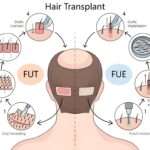
Before diving into how many grafts you might need, it’s important to understand what a hair graft is. A hair graft refers to a group of hair follicles that are removed from the donor area (typically the back or sides of the scalp) and transplanted to areas of thinning or baldness. Each graft contains one to four hairs, and the number of grafts you’ll need depends on the area that needs coverage.
Factors That Determine the Number of Grafts
1. Extent of Hair Loss
The most significant factor in determining the number of grafts you need is the extent of your hair loss. People with minimal hair thinning may require fewer grafts to achieve full coverage, while those with advanced hair loss will need a larger number of grafts.
For example, someone with a receding hairline may need around 1,000 to 1,500 grafts, while someone with significant baldness, particularly in the crown area, may need 3,000 to 4,000 grafts or more. The Norwood scale, which is commonly used to classify male pattern baldness, is often used to assess the extent of hair loss and determine the number of grafts needed.
2. Desired Hair Density
Not everyone seeks the same level of density after a hair transplant London. Some individuals are content with a more natural, slightly less dense look, while others want their hair to look as thick as possible. The desired density will directly influence the number of grafts required.
Generally, 1,500 to 2,000 grafts can achieve a reasonable level of fullness, while 3,000 to 4,000 grafts are needed for a denser, more full head of hair. The higher the density you desire, the more grafts you will need to create that effect.
3. Hair Type
The texture and thickness of your hair can impact the number of grafts required. If you have thick, coarse hair, fewer grafts may be needed to achieve a full appearance compared to someone with finer hair. The greater the hair thickness, the more coverage each graft can provide. This is because thicker hair naturally creates the illusion of more volume.
On the other hand, individuals with finer hair might require more grafts to achieve the same level of density. Fine hair has less volume and may need more grafts to create the illusion of a thick, full head of hair.
4. Donor Hair Availability
The number of grafts you can receive is also influenced by the quality and availability of donor hair. If you have a plentiful donor area with healthy, thick hair, you may be able to undergo a larger transplant. However, if your donor area is limited due to previous hair loss or thinning, the number of grafts you can receive might be restricted.
The donor area is crucial because once the hair follicles are taken from this region, they are permanent. This is why evaluating donor hair density and quality is one of the first steps in any London hair transplant consultation.
Average Number of Grafts for Different Hair Loss Types
1. Minor Hair Loss (Hairline Recession)
If your hair loss is limited to the hairline or a small area of thinning, you may need around 1,000 to 1,500 grafts. This amount will typically be sufficient to restore the hairline and create a natural, fuller look without the need for a high-density transplant.
2. Moderate Hair Loss (Thinning Crown or Widening Bald Patch)
For individuals with moderate hair loss, such as thinning in the crown or larger bald patches, the required number of grafts can range from 1,500 to 2,500 grafts. This number will help restore a significant portion of hair and address thinning areas while maintaining a natural look.
3. Severe Hair Loss (Extensive Baldness)
Those experiencing advanced baldness may require anywhere from 2,500 to 4,000 grafts or more. This is especially common for individuals who have significant thinning in both the hairline and crown areas. In cases of severe hair loss, the transplant may need to cover a large area, requiring a greater number of grafts to ensure full coverage.
How Many Grafts Can You Get in One Session?
Most London hair transplant clinics can perform between 2,000 and 4,000 grafts in a single session, depending on the technique used and the size of the donor area. This typically allows for the restoration of a significant portion of your hair in one sitting.
In cases where you require more grafts, multiple sessions may be needed. Your surgeon will discuss the best approach based on your specific needs, taking into account the donor hair availability and your desired final result.
How Long Does It Take to See Full Results?
While the number of grafts plays a large role in the final outcome, it’s essential to understand that hair growth takes time. After a hair transplant London, the transplanted hair will fall out in the first few weeks as part of the natural shedding process. New hair will begin to grow in its place after a few months, but full results may not be visible until 9 to 12 months after the procedure. Be patient during this period, as your final results will take time to fully develop.
Conclusion
The number of hair grafts needed for a full head of hair depends on various factors, including the extent of your hair loss, desired density, hair type, and the quality of your donor hair. While minor hair loss may require 1,000 to 1,500 grafts, more extensive hair loss may require 2,500 to 4,000 grafts or more. Understanding these factors will help you set realistic expectations and plan for your procedure. During your consultation, your surgeon will assess your individual needs and recommend the right number of grafts for the best possible results.