Precision is the common language spoken across both the automotive and aerospace industries. Whether it’s a vehicle powering down the motorway or an aircraft soaring miles above the ground, every component must work in flawless harmony. This demand for perfection starts at the microscopic level—inside the joints, shafts, and couplings that transfer motion and torque. Among the many specialised tools that support this level of accuracy, spline broaches stand out as unsung heroes. Their ability to form exact internal and external spline profiles makes them indispensable for manufacturers who cannot afford even the slightest deviation in part geometry.
Understanding the Precision Behind Spline Broaching
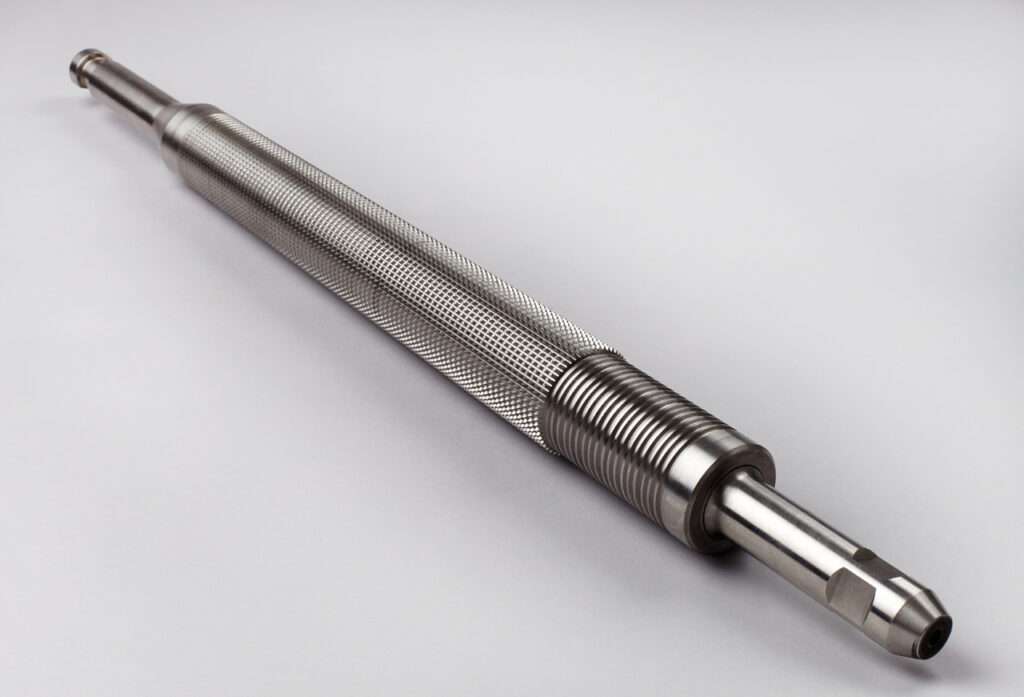
Spline broaches are engineered to cut multiple teeth or grooves in a single, controlled stroke. Each tooth on the broach is incrementally larger than the one before it, allowing material to be removed gradually and predictably. The result is a finished profile with perfectly spaced, uniform splines capable of handling rotational forces with absolute stability.
Unlike milling or shaping, which often require multiple steps and create opportunities for cumulative errors, broaching completes the entire profile at once. This one-pass process eliminates many of the alignment uncertainties that occur with multi-stage machining. The consistency of the cutting action is what gives spline broaches their reputation for reliability and repeatability—two qualities that are essential for industries where failure is not an option.
Accuracy at the Heart of Automotive Innovation
In automotive manufacturing, especially with the shift toward electric and hybrid powertrains, precision has never been more important. Spline broaches are central to producing components such as transmission gears, CV joint splines, steering system fittings, torque converter hubs, and electric motor shafts. These parts must fit together perfectly to ensure smooth power transfer and long-term durability.
Electric vehicles, for example, operate at much higher rotational speeds than traditional combustion engines. A misaligned spline or uneven tooth profile can lead to vibration, noise, energy loss, or premature wear—issues that automotive engineers work tirelessly to avoid. Spline broaches eliminate much of this risk by ensuring that every spline cut is identical, regardless of the production volume.
Their high accuracy also contributes to improved efficiency. Because spline broaches produce consistent shapes with minimal finishing required, they help streamline the manufacturing process. This is vital in an industry where speed, scalability, and precision must coexist. Manufacturers can rely on broaching to keep up with demand while delivering components that exceed performance standards.
Meeting the Rigorous Standards of Aerospace Engineering
Accuracy in the aerospace sector goes beyond performance—it’s a matter of safety. Aircraft components must withstand extreme temperatures, enormous pressure changes, and constant mechanical stress. A flawed spline can compromise the integrity of systems responsible for flight control, landing gear operation, or engine performance.
Spline broaches are used extensively to shape the internal and external splines that appear in turbine components, actuation systems, gearbox assemblies, and structural connectors. These parts must meet incredibly tight tolerances, often measured in microns. Broaching provides a level of precision that few other machining processes can achieve consistently.
One of the key advantages spline broaches offer aerospace manufacturers is their ability to produce exceptional surface finishes. A smoother surface reduces stress concentrations that can lead to fatigue and cracks over time. In high-stress environments like aircraft engines, this improvement in surface integrity directly enhances component lifespan and safety.
Additionally, broaching is particularly effective for cutting tough materials such as titanium and nickel-based alloys—metals that are notoriously difficult to machine but essential for aerospace applications. The controlled cutting geometry of spline broaches reduces tool deflection and maintains accuracy even when working with these demanding materials.
Driving Manufacturing Efficiency Without Sacrificing Precision
In both automotive and aerospace manufacturing, productivity is as crucial as precision. Spline broaches help achieve this balance by significantly reducing machining time. Because they form the complete spline in a single stroke, there is no need for multiple tool changes or repeated passes. This not only speeds up production but also simplifies process control—operators can trust that each completed component will meet specifications without constant adjustments.
The repeatability of spline broaches also reduces waste. In industries where materials like titanium or high-strength alloys are expensive, minimising scrap is a major advantage. Broaching ensures that the vast majority of parts fall within the desired tolerance range, reducing the need for rework and improving overall efficiency.
Moreover, spline broaching integrates well with automated manufacturing systems. Vertical broaching machines in particular can be paired with robotic loading systems, enabling continuous, high-speed production without sacrificing accuracy. This makes the method future-proof as the automotive and aerospace sectors push further into automation and digital manufacturing.
A Tool That Quietly Shapes the Future of Mobility
While spline broaches rarely take center stage in discussions about innovation, their contribution is immense. The accuracy they provide supports the development of lighter, faster, and more efficient vehicles and aircraft. Their reliability helps engineers design components with confidence, knowing that production methods can meet even the most demanding specifications.
Ultimately, spline broaches form the hidden foundation of many critical systems in modern mobility. Their role in ensuring precise, durable, and high-performance parts continues to grow as industries evolve. By delivering accuracy at scale, spline broaches help manufacturers stay ahead in a competitive landscape—shaping the machines that move the world with quiet, unwavering precision.